Key takeaways:
- Prescriptive analytics provides actionable answers, moving beyond what happened (descriptive) or what might happen (predictive) to recommend specific, optimal actions.
- The process follows a structured 5-step engine: define objectives, prepare data, model scenarios, generate prescriptions, and implement with iterative learning.
- Success starts with a precise, computable question, framed within clear business constraints, to guide the entire analysis toward a tangible outcome.
- Practical implementation is streamlined with tools like Excelmatic, which automates data integration, cleaning, analysis, and visualization into a cohesive workflow.
- It augments, rather than replaces, human expertise by handling complex simulations, allowing leaders to focus on strategic judgment and final approval.
Most data stories end with a question mark. You see the chart, you understand the trend, you feel the urgency — but then you're left staring at a graph, wondering, "Okay, but what's the actual move?" This is the cliffhanger that plagues modern business intelligence. Prescriptive analytics is the author that writes the next chapter. It doesn't just present the problem; it provides the script for the solution.
This guide breaks down how this advanced form of analytics operates, moving from raw data to a recommended decision.
Why Prescriptive Analytics Matters
Before diving into the "how," it's critical to understand the "why." Traditional analytics excel at hindsight ( What happened? ) and foresight ( What might happen? ). But they stop short of what leaders need most: guidance. In a landscape of infinite variables and constrained resources, guessing the optimal path is a high-risk strategy. Prescriptive analytics introduces a systematic, computational method to navigate this complexity, transforming data from a reporting tool into a decision-making partner.
How Prescriptive Analytics Works
Prescriptive analytics functions as a systematic engine, transforming raw data into clear directives for action. It operates through a core set of interconnected components, powered by the ability to process more variables and scenarios than the human mind can manage.
1. Define Prescriptive Analytics Objectives
It all starts by translating a broad business goal into a specific, computable question. Instead of "increase sales," the objective becomes "determine the optimal discount rate and channel mix for Product X to maximize profit over the next quarter." This precise framing sets the destination for the entire analysis.
2. Data Preparation for Prescriptive Analytics Models
The system then ingests and unifies vast amounts of data — historical records, real-time feeds, and predictive forecasts. This step leverages machine learning to clean, organize, and contextualize information, creating a comprehensive "decision-ready" dataset from thousands of disparate data points.
3. Prescriptive Analytics Modeling and Scenario Analysis
Using this prepared data, analytical models simulate countless potential actions and their likely outcomes. Think of it as running thousands of "what-if" scenarios in minutes — testing different decisions against variables like market conditions, resource constraints, and operational limits to map the entire landscape of possibilities.
4. Generate Prescriptive Analytics Recommendations
Here, the system shifts from exploration to prescription. It analyzes all simulated scenarios to identify the single best course of action that achieves the defined objective. The output is a clear, prioritized recommendation, such as "launch the promotion on Channel A at a 15% discount and increase inventory at Warehouse B by 20%."
5. Implement and Optimize Prescriptive Analytics Solutions
The final component closes the loop. Recommendations are implemented, and their real-world results are continuously monitored. This performance data is fed back into the system, allowing the models to learn, adapt, and refine future prescriptions. This iterative cycle ensures that the analytics become smarter and more accurate over time.
Practical Prescriptive Analytics Framework: Excelmatic Implementation Guide
Understanding the theory is one thing; implementing it is another. Here's how Excelmatic transforms the prescriptive analytics workflow into a practical, actionable five-step process:
Phase 1: Define Your Prescriptive Analytics Objectives
Everything begins with translating a broad business goal into a specific, computable question.
First, clearly define the problem you want to solve or the objective you want to achieve — whether it's minimizing costs, maximizing profits, or improving operational efficiency. Most importantly, choose something specific, measurable, and valuable to your company. For a more intuitive approach, you can frame this as the question you want to answer, such as: "What type of marketing content should I push, and on which channels, to attract a younger audience?"
With Excelmatic, you can define these objectives through an intuitive interface, where the system translates them into computable optimization models, ensuring the entire analysis moves in the right direction from the start.
Pro Tip: How to Frame Questions for AI-Driven Prescriptive Analytics
The key at this stage is transforming vague goals into precise questions AI can compute. Use this "Context-Objective-Constraint" golden template:
"We are a B2B SaaS company facing 20% quarterly customer churn. I need to reduce churn by at least 10% next quarter while keeping retention costs under $50K. Constraints: no discounts over 25%, no additional support staff. Please provide 3 specific intervention plans with expected impact, cost estimates, and implementation steps."
Why this works: It forces you to define the business context, quantify objectives, identify real constraints, and specify the decision format you need — exactly what prescriptive analytics requires.
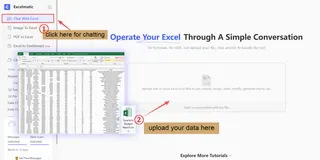
Phase 2: Data Collection for Prescriptive Analytics
Finding the right dataset is key to success. Excelmatic supports data collection from various sources — whether it's website traffic, social media platforms, customer interaction data, or internal spreadsheets. For businesses just getting started, we provide pre-configured training datasets that allow you to quickly understand prescriptive analytics workflows and their potential value.
Phase 3: Data Cleaning and Preparation
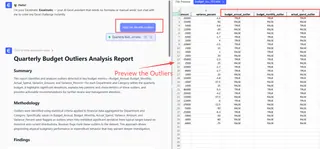
Missing fields and inconsistent outputs can quickly ruin your analysis. Excelmatic includes intelligent data cleaning tools that help you thoroughly clean your data, ensuring it's consistent and reliable. The system automatically detects and handles missing values, outliers, and inconsistencies. Before proceeding to formal analysis, you can use the AI-assisted data cleaning feature to complete data preprocessing efficiently.
Phase 4: Prescriptive Analytics Execution
This is where the core analysis happens. Prescriptive analytics builds on three other types of analysis: descriptive, diagnostic, and predictive analytics. In Excelmatic, you simply provide your data to the AI system, which automatically performs all three types of analysis. After analyzing historical trends and predicting future outcomes, the system goes a step further to provide specific, actionable guidance on the optimal direction for your business strategy.
Phase 5: Data Visualization and Dashboard Integration
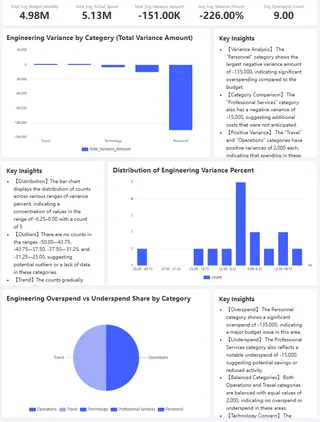
Data is only valuable when it's easily understood. Excelmatic automatically visualizes your analysis results through charts, graphs, and interactive dashboards. These visualizations help quickly communicate insights to stakeholders, conveying key themes, findings, and recommendations effectively. If you want to display the results in a customized dashboard, Excelmatic's dashboard functionality allows you to create tailored views that align with your team's specific needs and reporting requirements.
From Theoretical Framework to Tangible Results
The true power of understanding "how" prescriptive analytics works lies in demystifying it. It's not an AI black box making autonomous decisions. It's a systematic framework that amplifies human expertise. It handles the computational heavy lifting of simulating countless possibilities, allowing leaders to focus on strategic judgment, contextual nuance, and final approval.
Moving from reactive data consumption to prescriptive decision-making is the definitive competitive edge in the modern data economy. It's the difference between being a passenger watching the scenery and being the navigator charting the fastest course.
This is the edge Excelmatic is built to provide. Our platform translates the powerful, cyclical framework of prescriptive analytics from an academic concept into a daily business practice. We give you the engine to simulate, optimize, and act with confidence.
Stop wondering what your data means. Start executing what it recommends.
Discover how the Excelmatic framework can transform your decision-making process.
Frequently Asked Questions (FAQ)
Q: What's the real difference between predictive and prescriptive analytics?
A: Predictive tells you "what will likely happen" (e.g., 30% of customers may churn). Prescriptive tells you "what specific actions to take" to change that outcome (e.g., offer personalized discounts to these 5 customer segments through email campaigns on Tuesday mornings).
Q: What kind of data do I need to get started?
A: Start with your most critical business data: sales records, customer interactions, operational metrics, or financial data. Excelmatic works with structured data from spreadsheets, databases, or business applications. You don't need "big data" — even medium-sized datasets (thousands of records) can yield valuable prescriptions.
Q: Do I still need human judgment with prescriptive analytics?
A: Yes — think of it as augmented intelligence, not artificial intelligence. The system provides data-driven options, but your business context, ethics, and strategic vision are irreplaceable. Excelmatic presents multiple scenarios so you can make informed final decisions.